
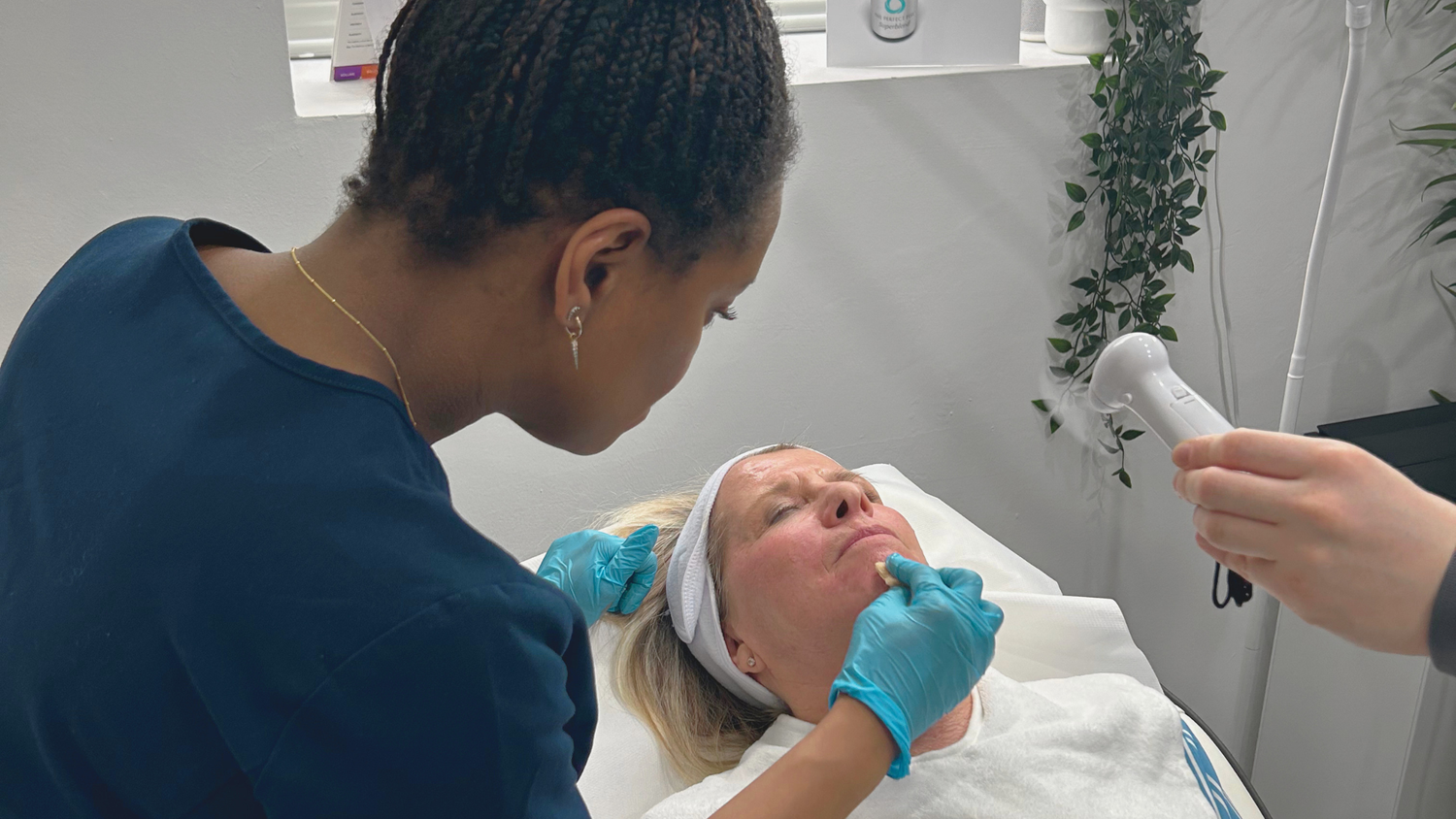
The peel is the event. What happens after is the result.
Most people put all their attention into the treatment itself: choosing the peel, finding the practitioner, getting through peel week. Then the fresh skin arrives, the compliments come in, and the routine quietly drifts back to whatever it was before. Three months later they're wondering where the glow went.
Here's the honest truth about professional peels: the treatment does the resurfacing, but you determine how long the results hold. The good news is that the determining factors are few, simple, and entirely in your control.
How long do chemical peel results last?
The direct answer: results from a professional peel like The Perfect Peel® or The Perfect Peel® Superblend become fully visible around day 28, and how long they hold from there depends almost entirely on aftercare: sun protection above everything else. With daily SPF and a consistent, simple at-home routine, results can be supported for months. Without them, new oxidative stress starts undoing the work almost immediately.
In other words, there's no fixed expiry date on peel results. There's only how well the new surface is looked after.
Why sun protection decides everything
Think about what a peel just did: it cleared away a dull, uneven surface and revealed fresher skin beneath. That new surface is the result and it's also more receptive to everything, including UV.
Sun exposure is the single fastest way to lose peel results. UV drives the oxidative stress behind dullness and uneven-looking tone, the very things the peel just addressed. Skipping SPF after a peel isn't neutral; it's actively re-creating the problem you paid to resolve. And in summer, when heat, sweat and long days outside are already pulling at the skin's surface, the stakes only go up.
This is why practitioners are relentless about it. Daily broad-spectrum SPF 50+, reapplied through the day, every day; not just sunny ones. Front Cover SPF 50+ was built for exactly this job: glutathione-powered and lightweight enough that there's no excuse to skip it. It covers what the rest of your routine leaves exposed.
The maintenance routine: a few products, clear roles
Once peeling completes and your practitioner gives the go-ahead, maintenance is deliberately simple. Not a ten-step regime; a handful of products, each with one job.
Hydrate the surface. Freshly resurfaced skin shows results best when it's properly hydrated and heat makes this harder than it looks. Sweat leaves water on the surface for a moment; evaporation takes it back, often leaving skin tighter than before. The Hyaluronic & Peptide Perfection Serum handles this on clean skin: hyaluronic acid supports hydration now, peptides support the look of firmness over time.
Support it daily. Consistent antioxidant care keeps oxidative stress from quietly accumulating between treatments. 5-A-Day is the daily step: glutathione (the master antioxidant) with squalane, vitamin E, peptides and botanical extracts, supporting a softer, fresher, more consistent-looking complexion. This is the constant that doesn't get skipped, morning and night.
Protect it, always. Front Cover, as above. If you only keep two habits after a peel, make them 5-A-Day and SPF; the baseline and the shield. They're designed to hand off to each other: one rehydrates and supports, the other protects what's underneath.
Reintroduce actives on your practitioner's clock. Acid-based steps- whether that's a targeted daily product like As a Lake, a quick refresh like Pep Talk, or a periodic at-home course like Night Shift - have a place in the longer-term routine, but the timing after a professional peel belongs to your practitioner. Reintroduce gradually, one at a time, and keep the SPF discipline tight whenever acids are in the mix.
What extends results, and what erodes them
Extends results: daily SPF 50+ reapplied through the day; a consistent glutathione-led daily step; proper hydration, especially through heat; gentle cleansing; follow-up peels spaced to your practitioner's plan; sensible sun habits.
Erodes results: skipped or once-a-day-only SPF; sunbathing or sunbeds on freshly resurfaced skin; piling actives back in too soon or all at once; picking or exfoliating during recovery; letting the routine collapse once the compliments start.
Notice that nothing on the first list is complicated. Peel maintenance isn't about doing more, it's about doing a few things without gaps. The skin that gets noticed is rarely one good morning; it's a surface supported consistently.
Should you book another peel?
For many people, yes - and it's worth understanding before your first one. A single peel delivers a visible reset. A spaced course compounds it: with The Perfect Peel® Superblend, a series of two to three treatments four weeks apart is commonly recommended for more established goals.
Your practitioner is the right person to map this. They've seen your skin before and after, they know what the peel addressed, and they can set the interval (and the at-home routine between appointments) that fits. That relationship is the real long-term asset: the peel is a moment, but a practitioner who knows your skin is what keeps results building year over year.
Common Questions
How soon after a peel can I restart my normal routine? Generally once peeling completes. Around day 7–10 depending on the peel, but your practitioner's guidance always leads. Bring actives back gradually rather than all at once.
Is SPF really necessary in winter or indoors? Yes. UV exposure accumulates year-round, and freshly resurfaced skin has no off-season. Daily SPF is the habit that separates results that last from results that fade.
My skin feels tight after hot days. Is that undoing my peel results? Tightness usually signals surface dehydration, not lost results. Sweat isn't hydration; as it evaporates, skin can feel tighter than before. Rehydrate with your serum and daily moisturising step, and keep layers light.
Can at-home products replace professional peels? No, they do different jobs. Professional peels deliver the step-change; the at-home routine supports and extends the look of it between visits. One system, two levels.
What if my results seem to be fading? Check the SPF habit first. It's almost always the gap. Then talk to your practitioner about whether it's time for a follow-up treatment or an adjustment to the routine.
The Takeaway
A chemical peel gives you a new surface. A simple, consistent routine is what lets you keep it: hydrate it, support it daily with glutathione, protect it with SPF, and bring actives back on your practitioner's schedule. The peel does the work once. You decide how long it shows.
Find a trained practitioner through Prfkt®Pro.
0 comments